


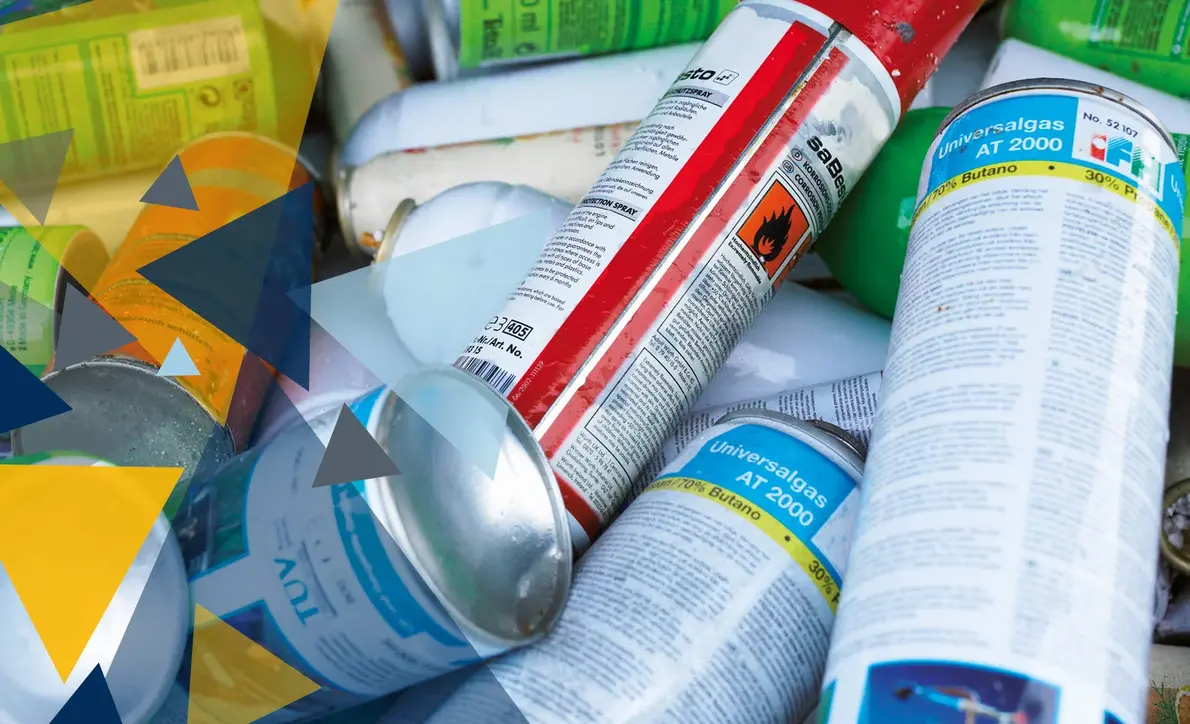
Specialised treatment for aerosol cans
Aerosol cans combine metal packaging, pressurised propellants and potentially hazardous contents. Their treatment therefore requires processes that can safely separate these different material streams. At our specialised facility, aerosol cans are sorted and processed under controlled conditions. Metals such as aluminium and tinplate can be separated for recycling, while propellants and residual contents are directed to appropriate recovery or treatment routes depending on their characteristics.
REMONDIS Industrie Service support waste management providers and industrial companies with both individual waste streams and larger quantities of aerosol cans and can assess in advance whether the material meets the relevant acceptance criteria.
To find out what we can do for you, please e-mail us
Recycling aerosol cans: a job for the experts
Given the potential damage to the environment, aerosol products containing propellant need to be recycled with skill, care and specialist technology. Most common propellants used in spray cans are propane, butane or dimethyl ether (DME), all of which are highly flammable and can form explosive mixtures with air oxygen. In other words, recycling and disposing of aerosol cans calls for the kind of expertise and experience that you will find at REMONDIS.
Which aerosol cans do we recycle?
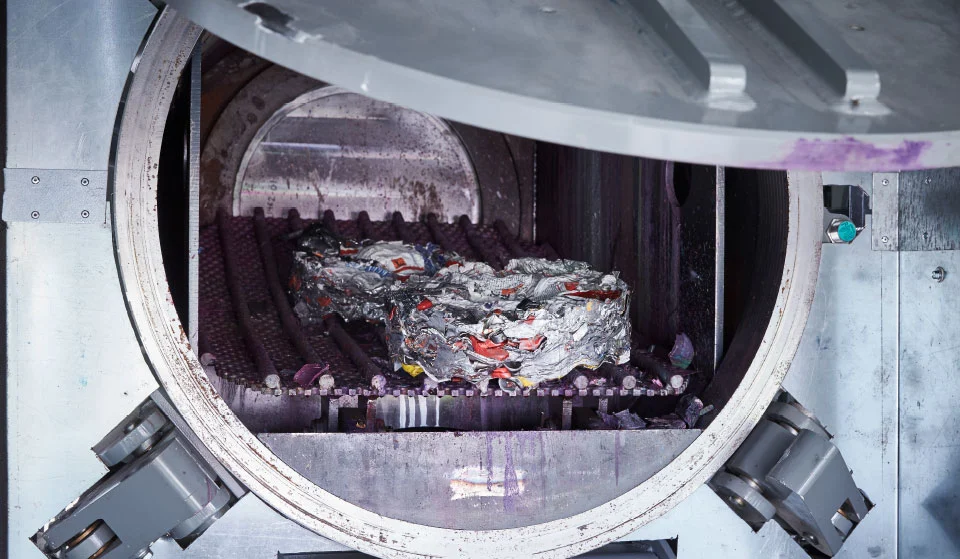
REMONDIS is the partner of choice for industry and consumers when it comes to recycling aerosol cans of all types and sizes. These range from spray cans containing paint or varnish to diverse aerosol products from the cosmetics, food or pharmaceuticals industries. Tinplate and aluminium from the cans are shredded, melted down and reused in production, while the propellant gases are used as a replacement fuel to generate energy. Only those elements that cannot be recycled are disposed of – needless to say, this is done in such a way that no harmful greenhouse gases are released into the atmosphere.
Disposing of full aerosol cans
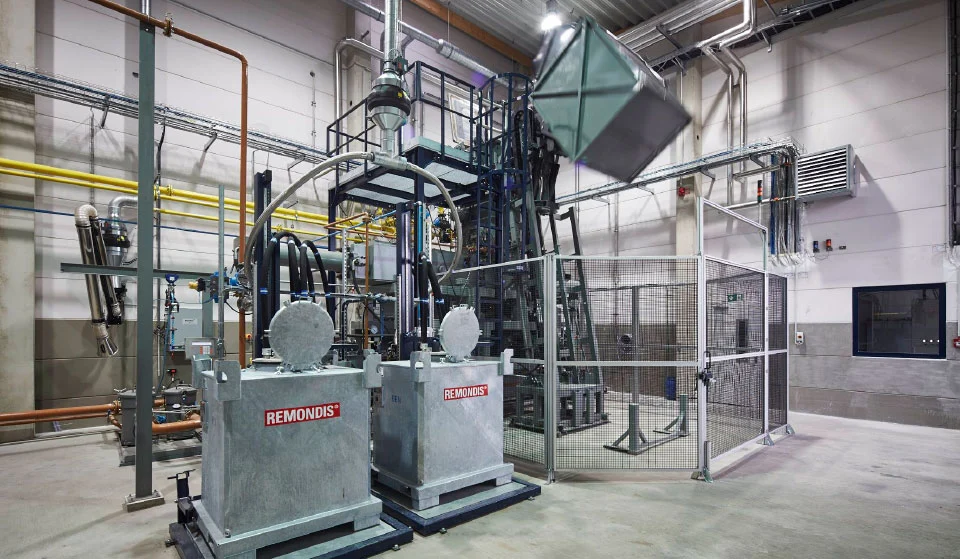
Our service also includes disposing of full or partially full aerosol cans. In this case, as well as reusing the metals and propellant gases, we recycle the contents of the spray cans – such as paint, varnish, cosmetics, lubricants or pharmaceuticals – or dispose of them in an proper responsible way. If required, we are also able to dispose of gas cartridges, lighters and other products that are not directly related to aerosol cans for example. Our industrial recycling centre in Bramsche is listed by the UBA, Germany’s central environmental authority, as one of the best available facilities for treating specialist waste.
Aerosol can recycling: how it works
When customers deliver aerosol cans in bulk for recycling and disposal, these are sorted and any contaminants or incorrect items removed. Following this, the aerosol cans are crushed under inert conditions and then separated into three material streams: propellants, liquids and metals. Once separated, the propellants are used as a source of energy, the liquids are treated thermally and the aluminium and tinplate from the cans are shredded, melted down and reintroduced into the production cycle. As required by law, we make a distinction between recycling and disposal treatments (R and D procedures). This means that we recycle aerosol cans in accordance with the R4 technical guidelines on the proper sound recycling/reclamation of metals and metal compounds.


Disposal of gas cylinders vs. aerosol can recycling
The main difference between the treatment of spray cans and gas cylinders is that gases are disposed of (D procedure) but spray cans are recycled (R procedure). While gases come in large containers (cylinders, LGB and ISO pressure containers) and are emptied by pressure and then burned or scrubbed directly, aerosol cans are generally delivered in bulk and the propellants they contain are recycled and used for energy production. Find out more about our solutions for gas cylinders